Related

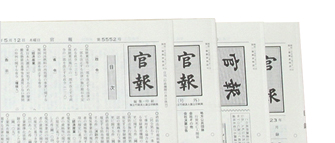
The Japanese public procurement (PP) market is one of huge potential, with EU-estimates ranging from EUR 550 billion to EUR 565 billion. EU-companies are relatively underrepresented in the PP-market in Japan, partly due to non-regulatory barriers and the geographical distance and lack of knowledge of the market. EU companies that are presently active in this market are primarily larger global players, with a sizeable presence in Japan.

In Japan, the majority of government procurement is conducted via competitive tendering procedures, with the participation of qualified suppliers. Those who are interesting in bidding for procurement contracts need to apply to the procuring entity concerned for qualification. In order to increase your opportunity of participating, it is recommended that potential suppliers apply in advance regardless of whether a particular procurement notice has been advertised or not.

[1] MOFA, Suggestions for Accessing the Government Procurement Market of Japan

Merits of participation in Public Procurement

Tendering for government contracts in Japan can have a number of merits:

  1. Government offices often pay a higher than market price for goods and services.
  2. There are a huge amount of tenders notices each year (more than 1.35 million in 2013).
  3. There is lower risk of non-payment by government offices.
  4. It can be good PR for your company, when venturing outside of PP.
  5. Many tenders do not make a distinction between larger and smaller companies; there is a more level playing field.


Tendering Procedures

Type of procedureOccurrenceTender sizeOpen TenderingCommonAnySelective TenderingRareAnyLimited (Single) TenderingFrequentAnyOpen counterFrequentSmallReverse (Dutch) AuctionRareAnyTendering procedures related to public works’ procurementVariesLargeOpen tendering proceduresippan kyousou nyuusatsuOpen...

WTO

Japan signed up to the World Trade Organisation Agreement on Public Procurement (GPA) in 1994, to create better opportunities for foreign companies in the signees’ respective countries.  Concretely this means that country who joined the GPA take measures to ensure fair and equal treatment of...

Legal Framework

The framework of laws, ordinances and regulations regulating Government Procurement is one of high complexity, involving dozens of legal texts.  Procurement by national entities is subject to the Accounts Law; on the other hand procurement by local government falls under the Local Autonomy Law...

Statistics

There are few comprehensive statistics available about public procurement in Japan, to get a good overview about how and where Japanese government institutions spend their money.  Although various statistics can be found, they are difficult to compare as often different thresholds are applied...

Current Market

Governments require a vast array of goods and services, to perform their duties, which makes it difficult to give a specific indication for specific products.  Foreign companies are currently primarily active in the following sectors (value-based), but still have relatively small shares:...

EU-Japan Centre's News

More
The Belgian-Luxembourg Chamber of Commerce in Japan (BLCCJ) is organizing the 13th edition of the…
The EU-Japan Centre is currently calling for expert report proposals for a new periodic monitoring…
The EU-Japan Centre is currently calling for expert report proposals for its "About Japan"…
The EU-Japan Centre is currently calling for experts who specialize in specific industrial sectors…
56th WCM: 19–23 October 2026 | 57th WCM: 1–5 March 2027 The EU-Japan Centre for Industrial…
The EU-Japan Centre for Industrial Cooperation is seeking experienced industry specialists to serve…

Events

More
13/05/2026
EU-Japan Centre for Industrial Cooperation Policy SeminarKey Developments in the Battery Sector and Opportunities for Japan-EU Cooperation—As Part of the Japan-EU Competitiveness Alliance…
Time in Brussels
-
Time in Tokyo
-
Exchange rate
1€ = 186,755 JPY